Grounding: On Encounter
Encounter at the Ethnographic Museum prompts a question: how are fragments shaped by colonial extraction dignified within a city of unsettled belonging? Ukubuyisa emerges as method—reorganising institutional relation and collaboration.
With Professor Ncedile Saule helping us to locate the work within ritual time, our attention turns toward the site of holding.
This page holds research in motion. It gathers conversations, fragments, theoretical reflections, and field encounters as they unfold. It does not move toward resolution too quickly, because return itself is not a singular act but an ongoing negotiation. What is documented here is not a conclusion, but the shaping of a method.
The Encounter
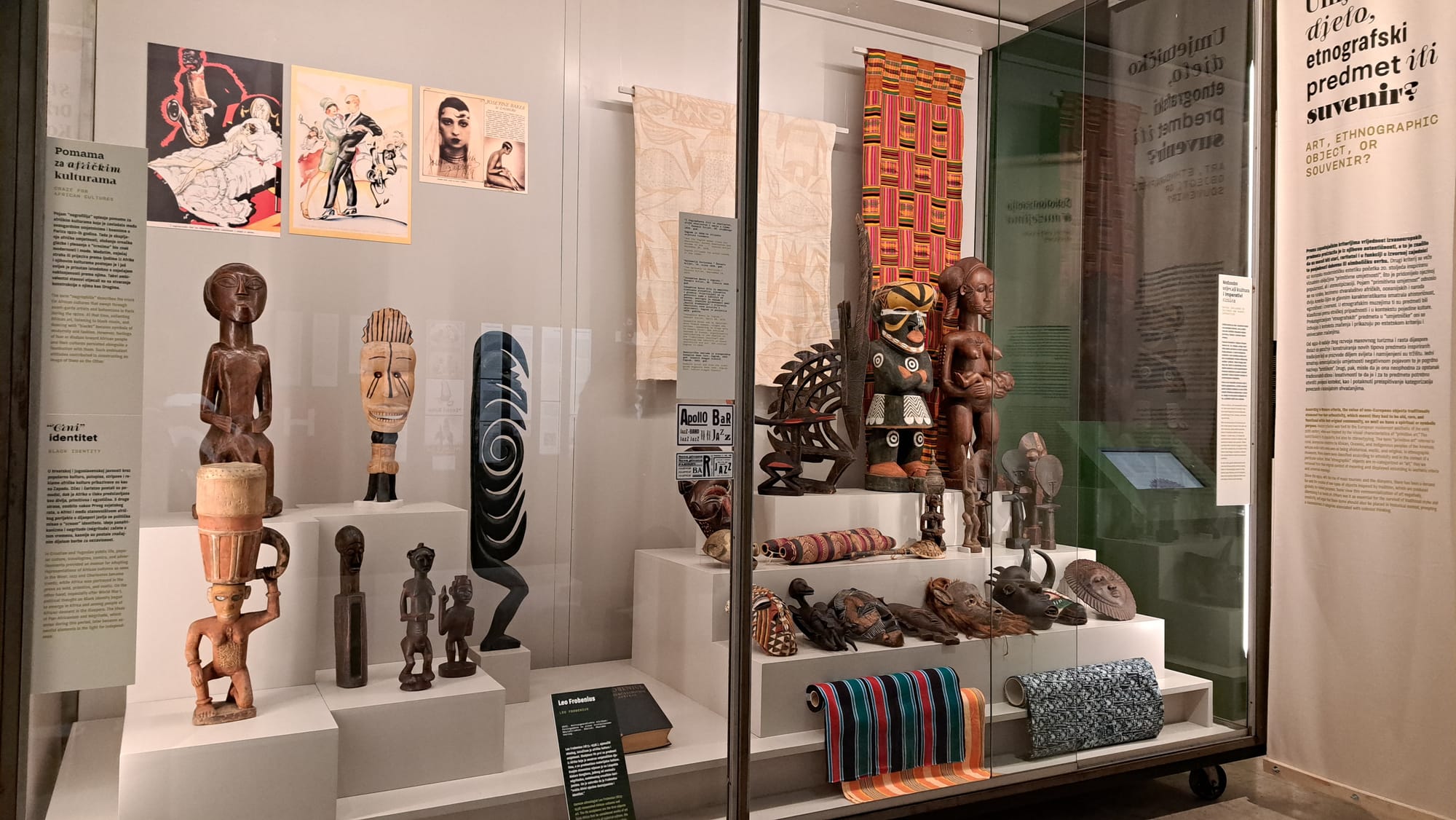
In 2024 an introductory meeting at the Zagreb Ethnographic Museum (ZEM) with Marija Živkovič, curator of the Collection of Non-European Cultures marked our first encounter with African cultural belongings that have been part of the institution’s holdings since the late 1980s.
The original display of these “non-European” collections had been curated decades earlier and remained largely unchanged until 2024.
During this visit, dialogue with Marija offered intimate insight into how curatorial work within museums is not solitary, but dependent upon networks of collaboration—historians, conservators, researchers, and increasingly, communities of origin. The question of rethinking museum structures is not abstract; it is relational, incremental, and shaped by inherited constraints.
Below is an adapted reflection of what materialised.
“These brothers, Mirko & Stevo Seljan, went first to Ethiopia at the end of the 19th century … Emperor Menelik II hired them to ‘discover’—to map—the southern provinces of Ethiopia and try to establish a border with Kenya… They made this map by hand… Later they wrote that Menelik was as cruel as other European emperors in Africa.” Marija Živkovič (2024)
The “trophy room,” with its glass vitrines holding everyday belongings gathered during expeditions, was not empty. As a tomb for what it held in time, the room echoed something else: fragments speaking separation and unspoken histories.
The collection comprises cultural items from Congo, Ethiopia, and parts of South America. Accompanying labels list geography, dates, and generic descriptors—often drawn from collectors’ notes. The story reflected back is that of “the one sent to discover,” rather than the story of rightful relation.
In Languages of Return: Aimé Césaire and Dany Laferrière (2018), Jane Hiddleston reads Césaire’s Cahier d’un retour au pays natal, as staging return as a dual movement: rediscovering home from exile while imagining reconnection across the Atlantic. Standing in an ethnographic museum, one must ask how cultural belongings, stored in colonial catacombs, might rediscover home at all—let alone reconnect without practices capable of holding return.
Return here becomes multifaceted and ongoing. It requires multiple registers of thought and inquiry to locate keys capable of opening passage.
“… we had five years ago a temporary exhibition about the [brothers]. And it's really a big legacy because they have so many photos, letters, newspaper articles, not only objects they brought. And here, these two showcases are mostly belongings that Dragutin Lerman brought from Congo.” Marija Živkovič (2024)
On 22 Nov 2024, Putnici—Traveler’s opened at the Ethnographic Museum. The exhibition text situates the Collection of 'non-European' Cultures within journeys of people and objects from colonial times to the present. It acknowledges Croatia’s dual position in global processes: viewed in Western Europe as peripheral or exotic, while locally reproducing colonial stereotypes toward non-European cultures.
This duality complicates any simplistic restitution narrative. The task is not merely to reframe for a national audience. It is to center the communities of origin—to make any potential return legible first to those to whom these belongings belong.
In Igor Petričević's Beyond Transit (2022), they write of “precarious emplacement,” a migration concept describing being embedded while never fully settled. We begin to see the belongings in vitrines as similarly emplaced but not at home. Visible, yet dislocated.
“We don’t know much about these objects. We don’t know anything. Because from late 80s till 2015, no one studied it.” — Marija Živkovič (2024)
Ignorance here is not accusation. It is inheritance. An institutional condition shaped by decades of silence, shifting political orders, and limited transnational dialogue. What does it mean for an institution to hold what it cannot fully name? How does one begin dignifying fragments when the archive itself is partial?
These are not questions directed at a single curator, but at the structures that produced such distance.
Emplacement Without Home: On Borders and Glass
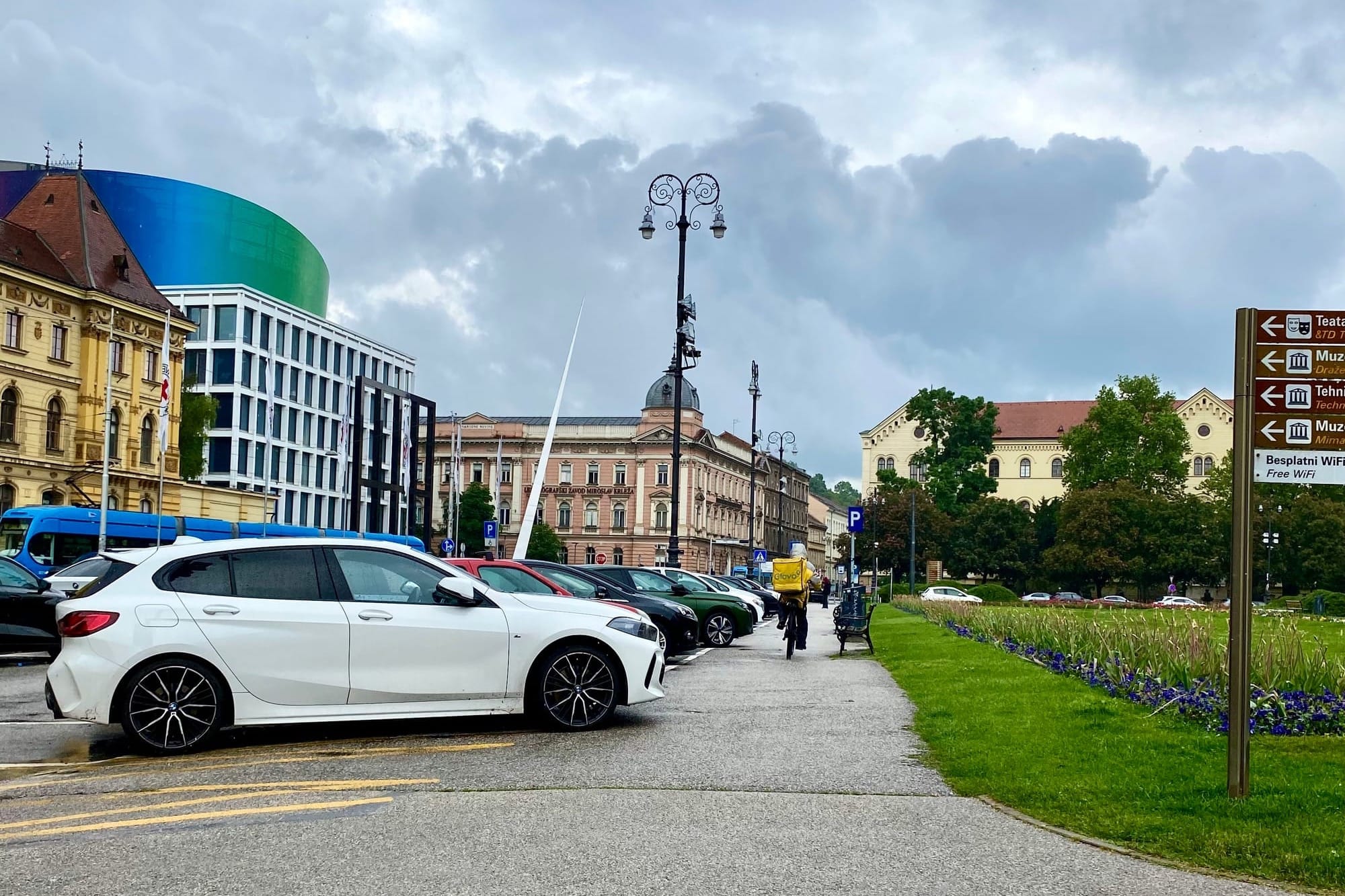
Croatia’s historical position is layered: shaped by the Austro-Hungarian Empire, reconfigured within socialist Yugoslavia, fractured through the wars of the 1990s, and reoriented through accession to the European Union and incorporation into the Schengen border regime. Sovereignty here has been repeatedly negotiated—externally imposed, internally contested, and recently stabilized through European recognition. Institutions formed within such a landscape are not neutral containers. They carry histories of peripheralization and aspiration—of being positioned at Europe’s edge while seeking full inclusion within it.
Zagreb today sits along a significant migration corridor. As part of the Schengen zone, Croatia occupies both the interior of Europe and one of its guarded thresholds. The city functions simultaneously as transit point, waiting room, and holding space. Migrants are present yet provisional—embedded, but not fully settled.
Within this landscape, African cultural belongings behind glass appear differently. They are not only colonial acquisitions; they are emplaced without being at home.
The museum becomes another kind of border: a site of classification and containment, a gatekeeper of mobility where objects cannot move unless systems allow them to. Glass vitrines echo border regimes—transparent yet impermeable. Visible, yet fixed.
To speak of ukubuyisa within such a site requires attentiveness not only to histories of extraction in Africa, but also to the political textures of the place in which these belongings are currently held. Return is not enacted in abstraction. It is negotiated within layered sovereignties, inherited absences, and contemporary border anxieties.
If Zagreb holds its own unsettled sense of belonging, then the work of return must attend to this complexity—not to excuse institutional distance, but to understand the terrain upon which relational repair must take place.
And so how else does a curator work with a collection of this nature? How does the mammoth task of dignifying these fragments come to be when it is left to the institution to resolve?
On Working With What Is Held
How does a curator work with a collection formed through extraction? How does the task of dignifying fragments unfold when the archive itself is partial and the relations that once animated these belongings are absent from the room?
An institution can preserve. It can conserve. It can catalogue. But preservation alone does not restore relation.
If these belongings were constituted through communal knowledge, ritual practice, and lived language, then their meaningful reactivation cannot be undertaken in isolation. Collaboration in this context is not an added gesture of inclusion. It is a structural requirement.
When opportunities arise to revisit collections shaped by colonial encounter, the question is not whether to invite other lenses, but how to reorganise the room so that multiple epistemologies can shape what is seen and said. Practitioners, thinkers, and knowledge holders connected to the communities of origin are not supplementary contributors. They are necessary interlocutors in any process that claims to approach return.
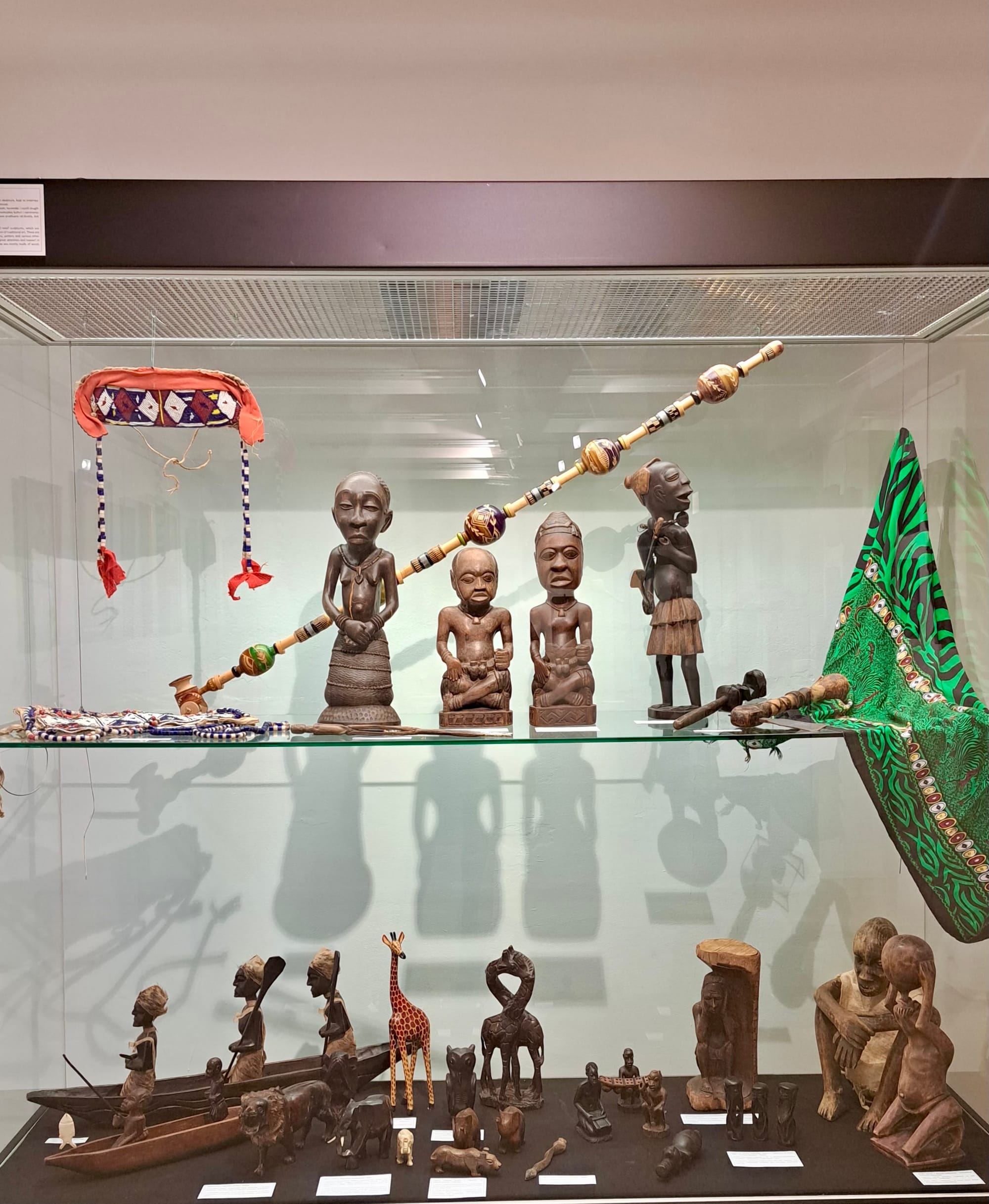
Standing before a single visible glass vitrine containing isiZulu belongings in stasis, I was aware of both proximity and limitation. Positionality does not guarantee fluency. Cultural adjacency does not replace communal authority. What it can offer, however, is a commitment to convening—to opening institutional space to forms of knowledge that exceed the museum’s inherited frame.
The work, then, is not intervention for its own sake. It is the testing of whether the institution is willing to think relationally rather than administratively. Whether co-researching can move from possibility to method.