Making material of Xhosa theology in practice
Guided by Professor Saule, this text situates Xhosa theology as a living practice for restitution. Ukubuyiswa approaches the museum not as neutral space, but as a site requiring ritual protocol, shared labour, and the careful work of ukukhapha and ukubuyisa.
Restitution as ukukhapha and ukubuyisa
Ukubuyiswa approaches museum space through Xhosa theology as a living practice rather than a symbolic reference. The work does not begin from the premise of neutral research. Entry into the store-room is understood as arrival in the position of abakhaphi—those who accompany, who carry, who speak on behalf of what has been held in suspension behind vitrines of ethnographic classification. The task is not extraction, but tending: allowing belongings to annunciate themselves in their vernaculars, with breath, ngengoma, and intention.
This orientation is shaped through dialogue with Professor Saule, whose teachings on Xhosa ritual protocol provide the grounding logic for how restitution might be practiced otherwise. Through extended conversations with him, the project’s lead researcher situates restitution within the lived theology of ukubuyisa—not as metaphor or convenient analogy, but as a rigorous framework for relational, ethical, and spiritual labour.
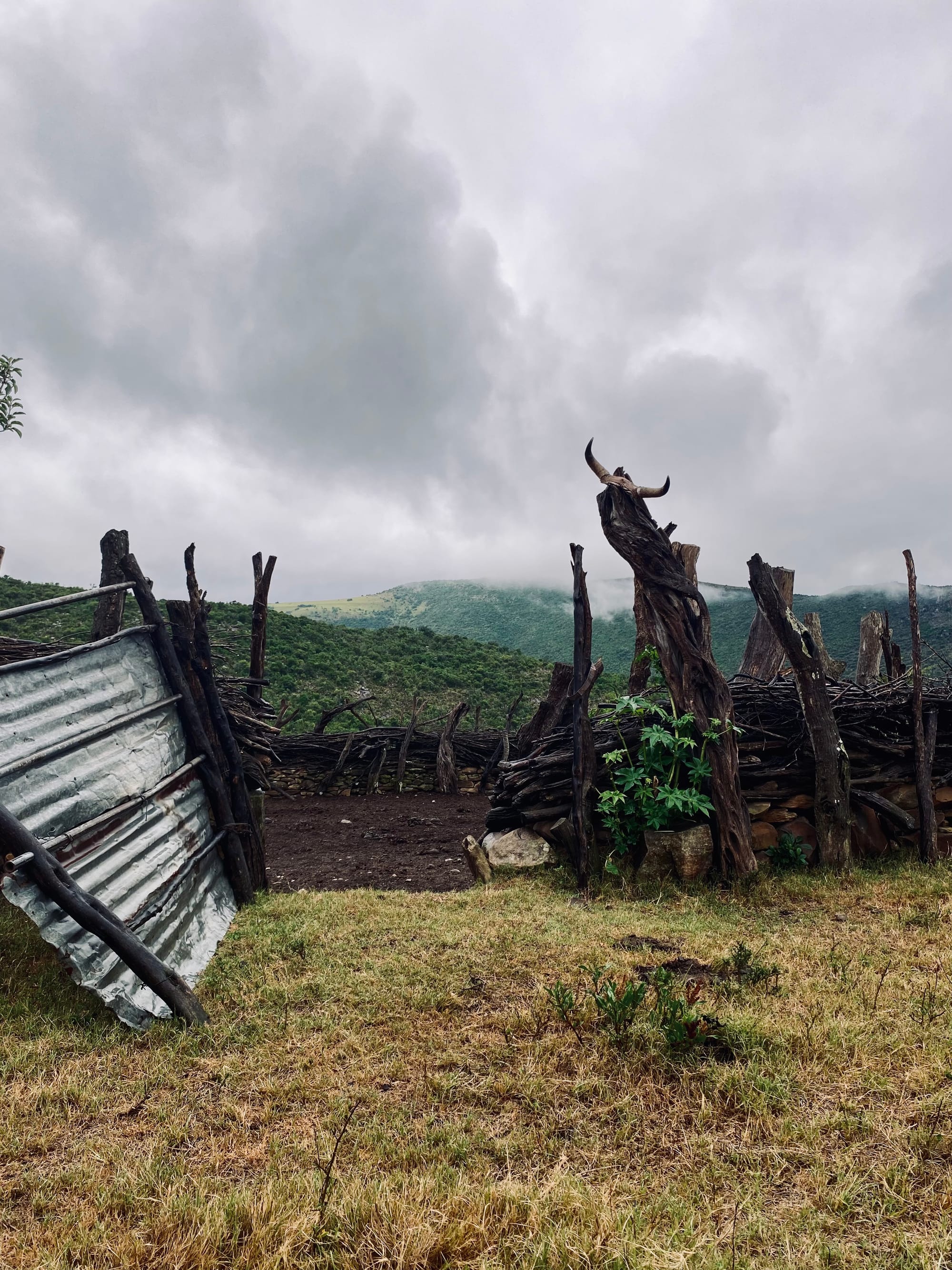
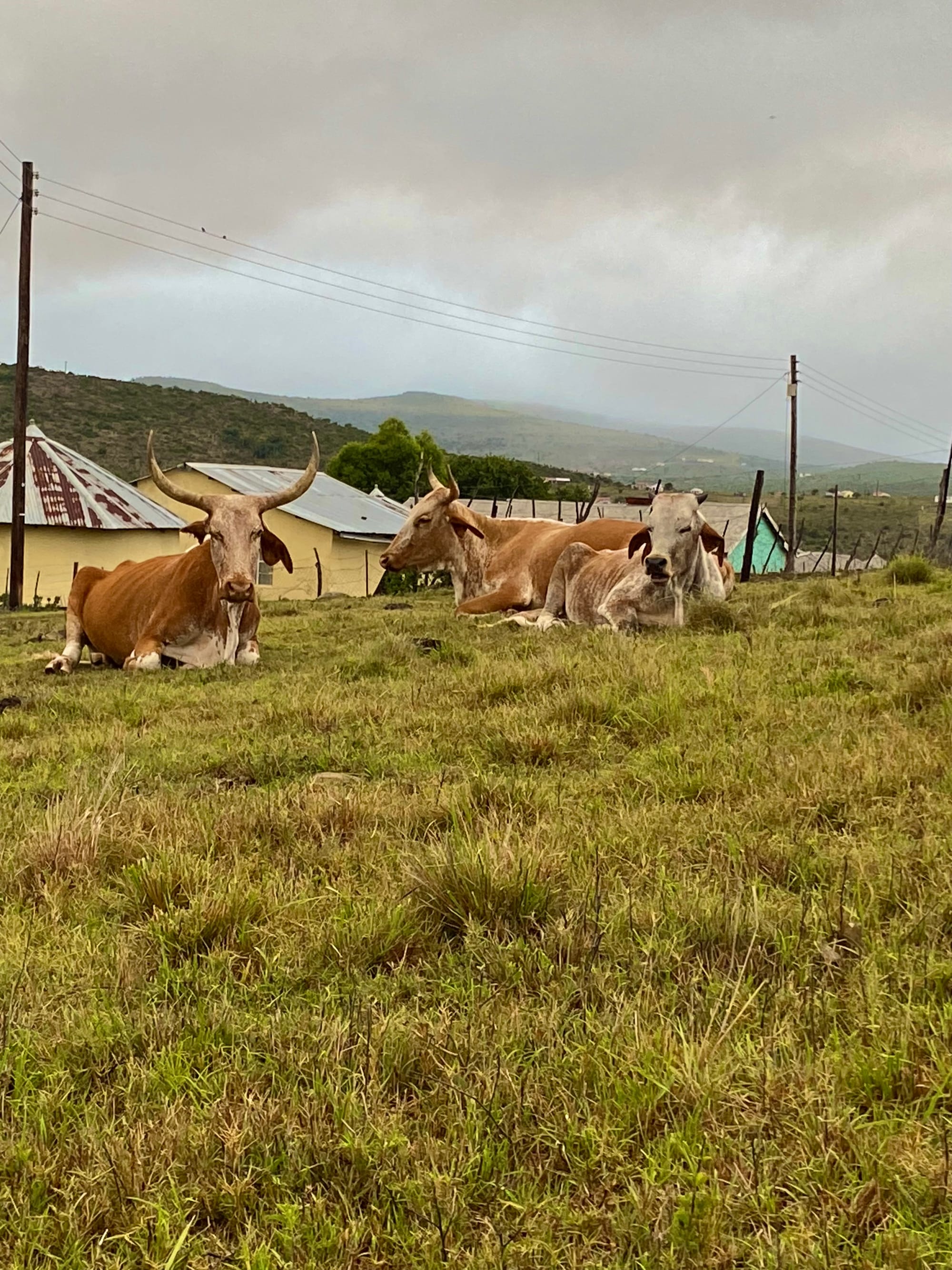
The researcher’s prior participation in a family-led ukubuyisa ritual in 2022 becomes an analytic reference point rather than a personal narrative. That experience revealed restitution as a choreography of multiple registers of labour: tending, dialogue, spiritual attentiveness, and re-presencing. Relatives arrived in stages, seemingly attuned to when their presence was required. Dress across the duration of the ritual extended an embodied language of isihlonipho. Each day unfolded as a multilogue of engagements designed to set ukubuyisa into motion. From living participants to the cow selected as offering, all were treated as active custodians of memory, process, and responsibility—each tending to umphefumlo with the hope of restoring balance, ukukhanya, and the easing of ubumnyama.
This lived understanding becomes critical when considering what occurs within museum archives.
Professor Saule explains that ukukhapha is not simply accompaniment in the literal sense. To khapha is to load the one who crosses with that which troubles those left behind—unspoken grievances, forgotten obligations, unresolved debts. It is an act of entrustment. The one being accompanied is asked to carry these matters across thresholds—over rivers, mountains, into other registers of existence—where they can be spoken on behalf of the living. A small ceremony marks this act, where members of the household gather and address these matters through the animal that will be offered. Words are not spoken abstractly; they are spoken to something, and then carried forward.
Ukubuyisa follows with expectation. The act of return holds the hope that what was entrusted will be answered. This is why naming matters: the one who accompanies has a name; the one who returns has a name; the offering itself is named. These preliminaries are not ornamental. They establish accountability long before any public declaration is made.
In outlining the structure of umsebenzi wokubuyisa, Professor Saule is precise about roles. Leadership rests with umkhulu walapha ekhaya—the senior bearer of responsibility—rather than being assigned by convenience. Other roles are clearly delimited: the one who speaks to the animal before slaughter, the one who performs the act itself. While roles may sometimes overlap, overload becomes strain. The wisdom of amaXhosa, he notes, lies in this attentiveness to distribution of labour, care, and consequence.
This clarity offers a critical lens for institutional restitution work. At the Zagreb Ethnographic Museum, curatorial staff have acknowledged that the labour of reading, holding, and accounting for African belongings exceeds the capacity of any single individual. Within a Xhosa theological framework, such an admission is not failure—it is a necessary diagnostic. It signals the need to convene others who are properly positioned to carry parts of the work.
Ukubuyiswa responds by assembling a distributed body of knowledge-holders: linguists and lineage-bearers, ritual specialists and readers of archives, artists and cultural caretakers. This is not supplementation of curatorial work, but a re-orientation of it. The archive becomes a site where roles must be named, responsibilities shared, and after-care anticipated.
Underlying this approach is the understanding that Isintu continues to call, regardless of where belongings are placed. Even when objects are held within white institutional spaces, their cultural and ancestral obligations are not suspended. They require custodians, descendants, and intercessors—those selected by the belongings themselves—to be present. Whether an object remains where it is or returns home, something remains unfulfilled if these relationships are not honoured. The risk is not only ethical but spiritual: a failure to tend to what continues to act, listen, and require response.
From this grounding, Ukubuyiswa articulates a repeatable protocol for work in museum space: greeting and requesting; naming what hurts and what is sought; pausing where language or ritual is absent; assigning roles with care; and building structures for after-care. In this order—ukukhapha preceding ukubuyisa—co-researching is not a committee or a consultation exercise. It is the gathering of those required to carry the rite, and the commitment to remain answerable to what returns.